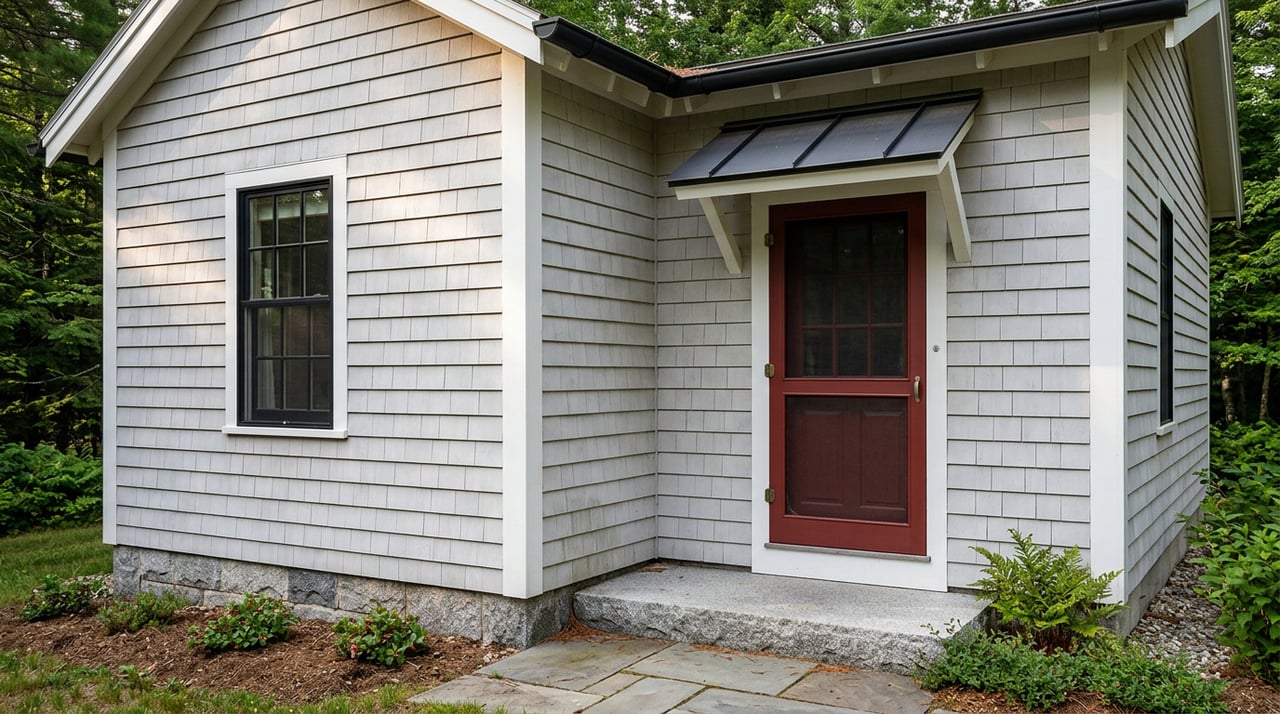
The Windham waterfront market carries a premium that looks straightforward on paper. As of December 2025, Redfin put the town's median sale at $475K, up 11.8% year over year, while waterfront-tagged listings sat around a $569K median. The gap looks like the price of a dock and a view.
It isn't. A meaningful share of that gap is buying a legally frozen structure. The cottage you close on may be smaller than the house you're allowed to end up with, and the difference is set by an ordinance the seller has no obligation to explain in plain English.
The 30% You May Have Already Inherited
Maine's Mandatory Shoreland Zoning Act, administered locally through Windham's Chapter 185, caps how much a nonconforming waterfront structure can be expanded. The state defines a "substantial expansion" as any increase of 30% or more in floor area or volume, and it's calibrated against the structure as it existed on January 1, 1989.
Two things about that 30% quietly reshape a purchase.
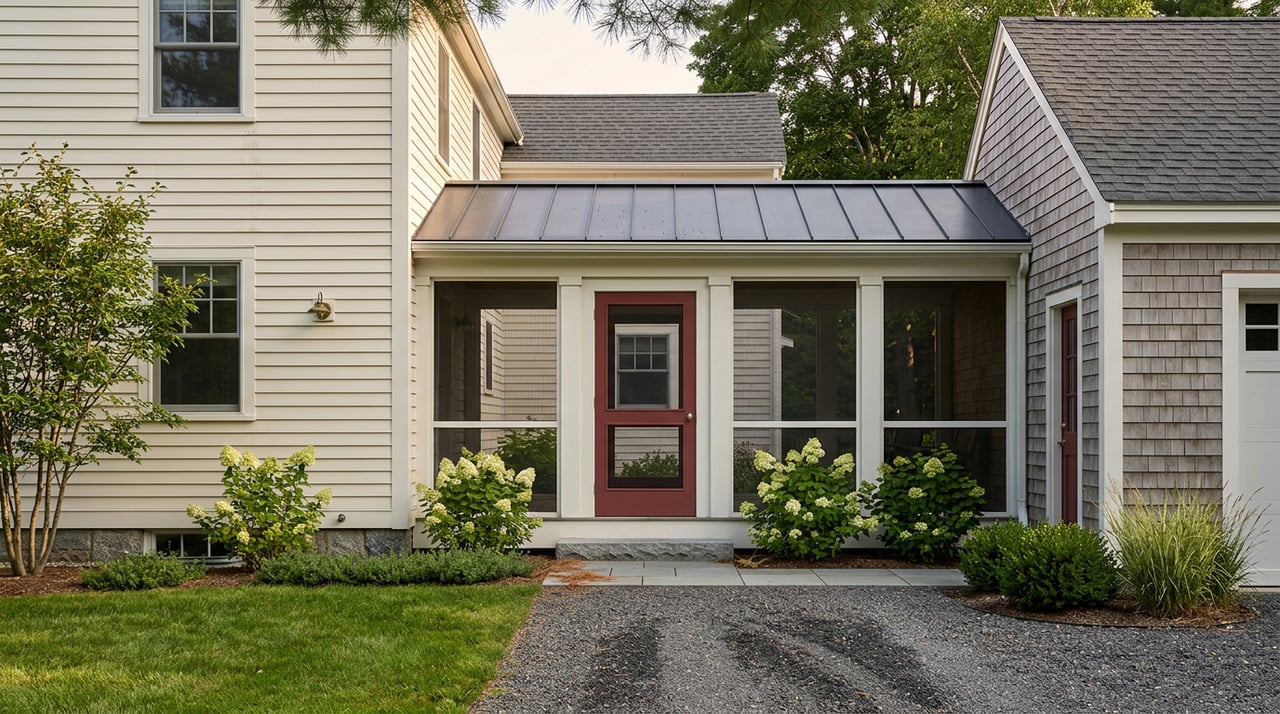
First, per Maine Home + Design's interview with a shoreland zoning practitioner, the 30% is a lifetime allowance, not a per-project one. If a prior owner enclosed a porch in 2003 and added a shed dormer in 2014, some or all of the expansion budget is already spent. The buyer inherits whatever is left.
Second, the calculation is a math problem, not a vibe. Under the current alternative method described by Portland law firm Murray Plumb & Murray, an owner can expand by 30% of the ground footprint of all nonconforming structures on the lot, or by 1,000 square feet, whichever is larger. Owners with a "combined nonconforming footprint" above roughly 3,333 square feet gain from the 30% option; smaller cottages come out ahead under the 1,000 square-foot floor.
A grandfathered cottage isn't a blank canvas. It's a building with a documented ceiling, and that ceiling was partly used up before you got there.
The Two Numbers That Change the Math
Two distances do most of the work in a Windham waterfront diligence.
250 feet. Under the state law, the shoreland zone extends 250 feet inland from the normal high-water line of great ponds and qualifying rivers, and 75 feet from certain streams. Sebago, Little Sebago, Highland, Forest, and Pettingill all trigger the 250-foot line. If the structure, the septic, the driveway, or the tree work you're planning falls inside that ribbon, the ordinance is in the room.
25 feet. Any portion of a structure inside 25 feet of the normal high-water line cannot be expanded, period, even if the expansion wouldn't push the building closer to the water. And a principal structure that sits entirely within that 25-foot band is capped at a maximum footprint of 800 square feet or 30% larger than its January 1, 1989 footprint, whichever is greater, with a 15-foot height ceiling. That is not a fixer-upper. That is a museum piece with plumbing.
What Nonconforming Actually Costs You at the Closing Table
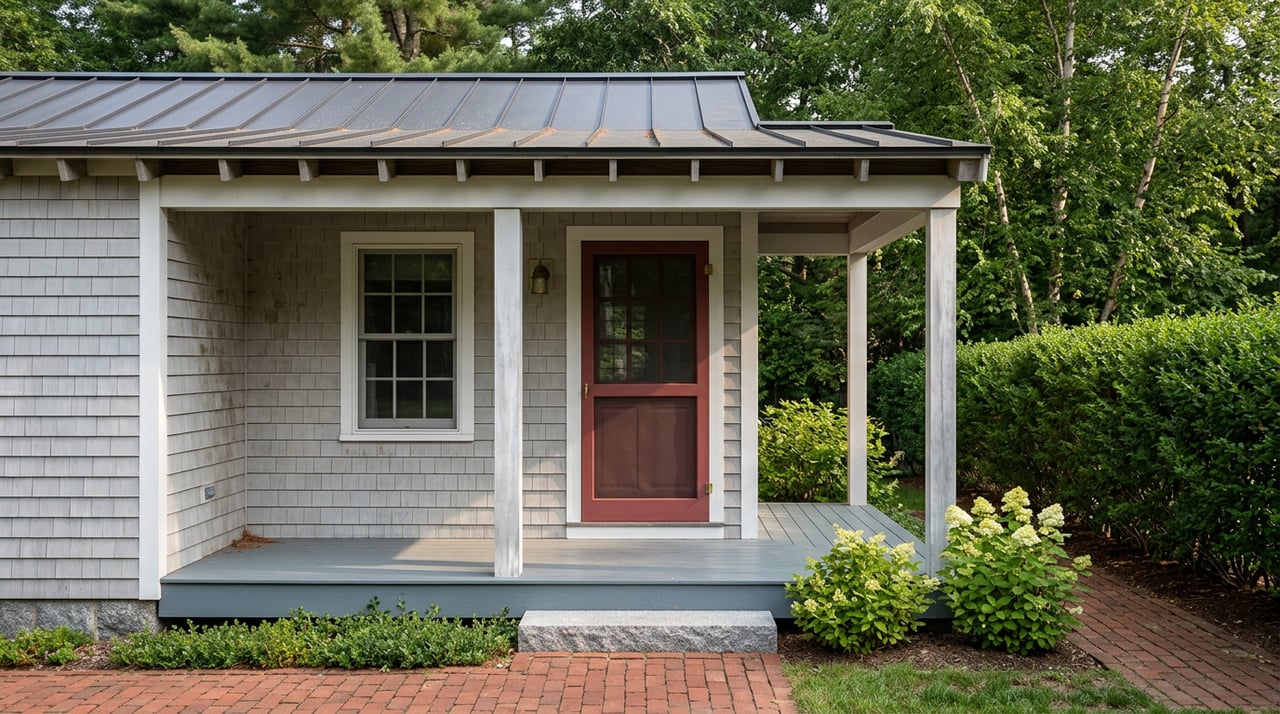
The cottages priced most attractively on Little Sebago and along the Basin Road side of Sebago tend to be the ones that sit closest to the water. Their closeness is why they exist. It's also why the following applies:
- No cutting inside the 75-foot buffer in a Resource Protection area abutting a great pond, except to remove safety hazards.
- Outside Resource Protection, selective cutting is capped at 40% of trees four inches or greater in diameter at breast height in any ten-year period, with a well-distributed stand required to remain.
- Any earth-moving that disturbs more than one cubic yard of soil in the shoreland zone must have a DEP-certified person on site during the work, a requirement in force since January 1, 2013.
- Certain commercial uses are prohibited outright next to great ponds classified GPA under Chapter 185, including auto washing, vehicle repair, and storage of chemicals beyond normal household or farm amounts.
The point isn't that these rules are unreasonable. The point is that they change what the property is worth to you specifically, based on what you're planning to do with it.
Sebago Carries an Extra Layer
Sebago Lake is the drinking-water supply for Portland and its service area, roughly 28,771 acres of surface water managed with unusual regulatory attention. That status doesn't change the state minimums in Chapter 185, but it does change the enforcement culture around them. Anything that could plausibly move sediment or nutrients into the lake gets read strictly. If a listing is on Sebago, assume the code enforcement office has seen every angle of the parcel before you have.
The Documents to Pull Before You Waive Inspection
Most of the friction on a Windham lakefront purchase surfaces in the last ten days of due diligence. It surfaces less often if you order these early:
- Full permit history from Windham Town Hall for the parcel back to at least 1989. This is how you learn how much of the 30% has been consumed. Under Maine law, code enforcement officers report shoreland zoning transactions to DEP on a biennial basis, so the paper trail exists. It just isn't in the MLS.
- The HHE-200 subsurface wastewater form on file for the current septic system, if any. Age, design flow, and location relative to the high-water line all matter, and a system that predates the file may need to be replaced under current rules if you expand the bedroom count.
- A survey showing the normal high-water line and the 25-, 75-, and 100-foot setbacks. Chapter 185 also allows the merger of contiguous nonconforming lots under common ownership to be avoided when each has at least 100 feet of shore frontage and 20,000 square feet of area and can support a compliant septic. That test lives on the survey, not in the deed description.
- The current shoreland district designation for the parcel. Resource Protection, Limited Residential, and General Development have materially different rulebooks under Chapter 185.
- Seller's Property Disclosure with specific attention to any prior variances, notices of violation, or after-the-fact permits. These follow the land.
- For Sebago frontage specifically, confirmation that no Portland Water District or Maine DEP enforcement action is pending.
Every one of these can be requested inside a standard inspection window. Together they answer the only question that matters on a nonconforming waterfront: what am I actually allowed to build here?
What the Market Is Telling Us in 2026
Windham's numbers in 2026 argue for taking this diligence more seriously, not less.
Homes.com's trailing-twelve-month median through mid-2026 sits at $520K, up 9% year over year, with average days on market around 29. Movoto put the April 2026 median list at $529K, down 7% from the prior April, suggesting the ceiling has flattened even as closed prices continue to rise. On the waterfront side, Redfin was tracking about two dozen listings at a $569K median. The Harpswell Realty Group's 2026 Maine outlook, citing national forecasts, expected 30-year fixed rates to hold in the 6% to 6.3% range through the year.
Read together, those numbers describe a market where buyers have slightly more time, slightly less competition, and no meaningful relief on rates. The waterfront premium is holding. Which means the cost of misjudging what a grandfathered cottage will let you do post-close is holding too. In 2021 you could paper over a bad diligence read with appreciation. In 2026 you cannot.
FAQ
If the 30% has already been used, is the house a bad buy?
Not necessarily. It's a bad buy at a price that assumes you can add a second story. It may be a fine buy at a price that assumes you're keeping the footprint. The question is which price you're paying.
Does the shoreland zone apply to interior renovations?
Interior work that doesn't change floor area, volume, or exterior dimensions generally sits outside the expansion rules, though electrical, plumbing, and septic upgrades can trigger separate permitting. When in doubt, the Windham Code Enforcement Office is the correct first call, and Maine DEP has said as much in its own guidance.
What about tearing the cottage down and rebuilding on the same footprint?
That's a reconstruction question, not an expansion question, and the answers depend on district, setback, and whether the reconstruction is voluntary or the result of a casualty. It is one of the most fact-specific corners of Chapter 185, and it is the wrong place to guess. Get the specific plan reviewed by the code enforcement officer before you offer.
Do these rules affect docks and floats?
Docks are treated as functionally water-dependent and follow their own standards under both the state law and Chapter 185. Piers and permanent structures over the water carry a separate permitting track. A dock that's fine for a seasonal float may not be legal as a year-round platform.
If you're weighing a lakefront purchase in Windham this year, the highest-value hour you can spend is the one before you write the offer. Michael Mahoney works through the permit history, survey lines, and shoreland district on a specific parcel with you, so the price you offer reflects what the ordinance actually lets you do with it. Let's connect before the inspection window, not during it.